You’re standing in the body wash aisle — or scrolling a product page at midnight — and the label says “sulfate-free.” That sounds reassuring. But flip the bottle over and you’ll find an INCI list (the standardized ingredient declaration every cosmetic product is required to carry) that means nothing without a decoder ring. What exactly is doing the cleaning in there? Is it gentle? Is the “sulfate-free” claim actually meaningful, or is it marketing shorthand that papers over a more complicated story?
Surfactants — short for surface-active agents — are the workhorses of any body wash. They’re the molecules that grab onto oil and dirt on one end and water on the other, letting the whole mess rinse away. Every cleanser has them. The question is which kind, because that single formulation choice determines how your skin barrier holds up over thousands of washes across a lifetime of showers. This guide breaks down the three main surfactant families you’ll encounter — SLS, SLES, and glucosides — names their tradeoffs explicitly, and gives you a decision rule you can use before you add anything to your cart.
The Tradeoff Trio: SLS, SLES, and Glucosides Side by Side
SLS — Sodium Lauryl Sulfate
SLS (sodium lauryl sulfate) is the original high-performance cleansing workhorse, and it has appeared in personal care formulas since the early twentieth century. It produces dense, satisfying lather, rinses completely clean, and costs pennies per bottle to manufacture — which is why it dominated the mass-market category for decades.
The tradeoff is irritation potential. SLS works well because its molecule is small enough to penetrate the top layers of skin, and that same penetration disrupts the lipid barrier — the protective fatty layer your skin maintains to stay hydrated and resilient. According to Healthline’s ingredient explainer “What Is Sodium Lauryl Sulfate (SLS)?”, even at concentrations as low as 1–2%, SLS can cause measurable transepidermal water loss (TEWL) in people with compromised or sensitive skin. The Environmental Working Group’s Skin Deep database rates SLS as a moderate concern for skin irritation, citing studies that found redness and dryness with repeated topical use.
For healthy, oily, or young skin in a mild climate, this may be a non-issue. For eczema-prone, sensitized, or mature skin — or anyone in a cold, dry environment — it is a meaningful strike. The fact that SLS rinses from most people’s skin without lasting damage does not mean it is the right tool for every skin type.
The honest summary: SLS is effective and inexpensive. It is not the villain it is sometimes made out to be in clean-beauty marketing, but the irritation data is real, and Cosmetics Info’s sodium lauryl sulfate ingredient overview acknowledges the barrier-disruption tradeoff directly. If your skin is compromised in any way, SLS is a category to avoid — not because it is toxic, but because it is simply too strong for daily use on sensitized skin.
The
$9.20
In stock on Amazon
Check price on AmazonSLES — Sodium Laureth Sulfate
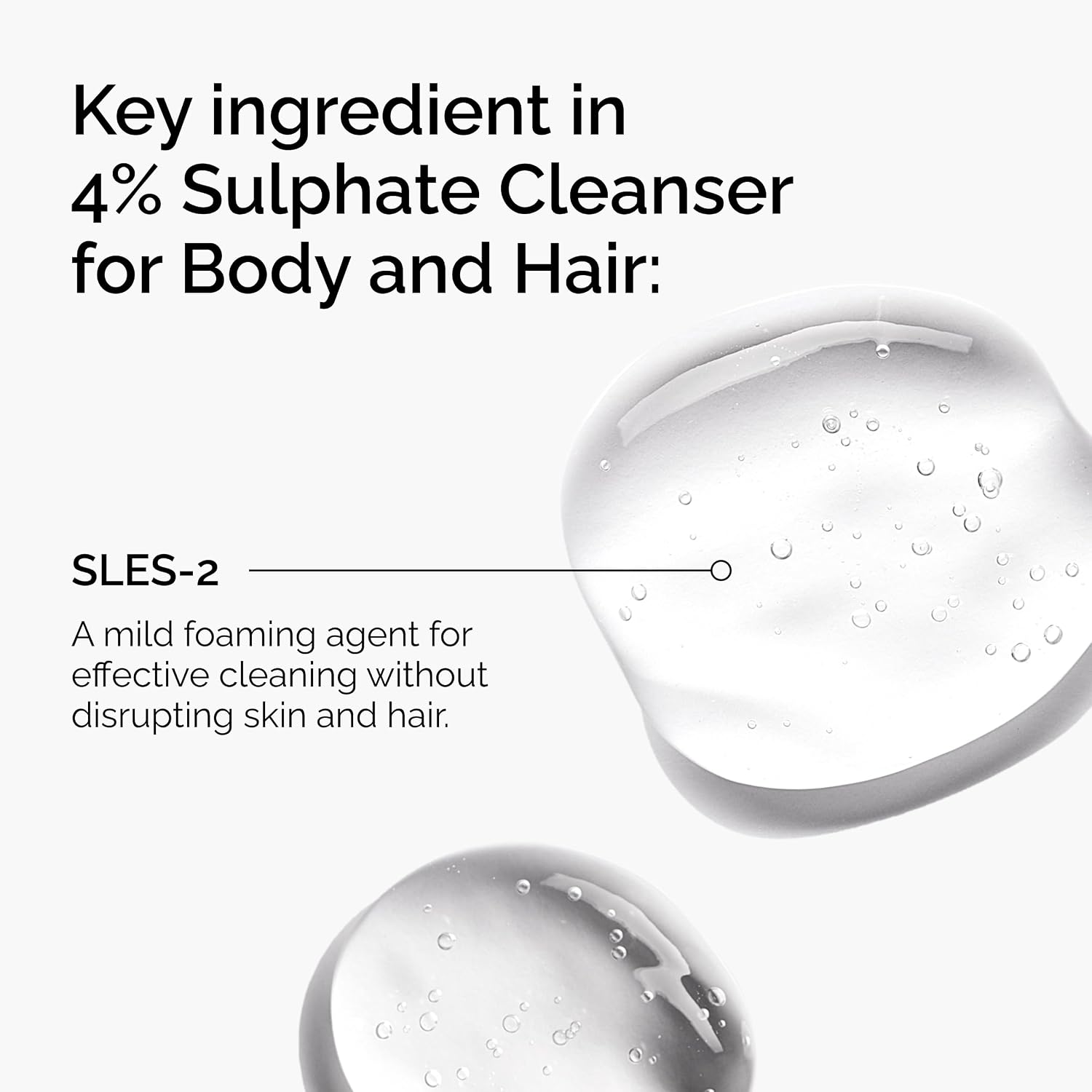
SLES (sodium laureth sulfate) is SLS that has been run through a process called ethoxylation — a manufacturing step that attaches ethylene oxide molecules to the SLS chain, enlarging the molecule. The larger size means it does not penetrate the skin barrier as aggressively. Result: meaningfully milder, still productive lather.
This is where the “sulfate-free” label starts getting philosophically interesting. SLES is technically a sulfate. But many brands market their formulas as “SLS-free” while still using SLES — a distinction that Byrdie’s editorial feature on sulfate-free body washes calls out as worth understanding before you trust a front-of-label claim. If “no sulfates” matters to you, verify the INCI list; if “no SLS” is what you actually need, SLES may be a perfectly workable compromise.
There is one additional wrinkle: ethoxylation can introduce trace amounts of 1,4-dioxane, a potential contaminant of concern. The Beauty Brains formulation science podcast episode “Are Sulfates Really That Bad?” addresses this specifically, noting that reputable manufacturers apply vacuum-stripping during production to bring 1,4-dioxane levels well below regulatory thresholds. That process is not universal, which is why third-party certifications — NSF/ANSI 305, COSMOS, USDA Organic — matter; they often set explicit limits on residual contaminants.
The honest summary: SLES is the middle lane. Gentler than SLS, more affordable than glucosides, and widely tolerated by normal-to-combination skin. For certified-clean buyers who want to avoid the ethoxylation question entirely, it is still not ideal — but it represents a significant step up from SLS for anyone who feels tightness or dryness after washing.
Ingreendients
$19.95
In stock on Amazon
Check price on AmazonGlucosides — The Plant-Derived Gentlest Option
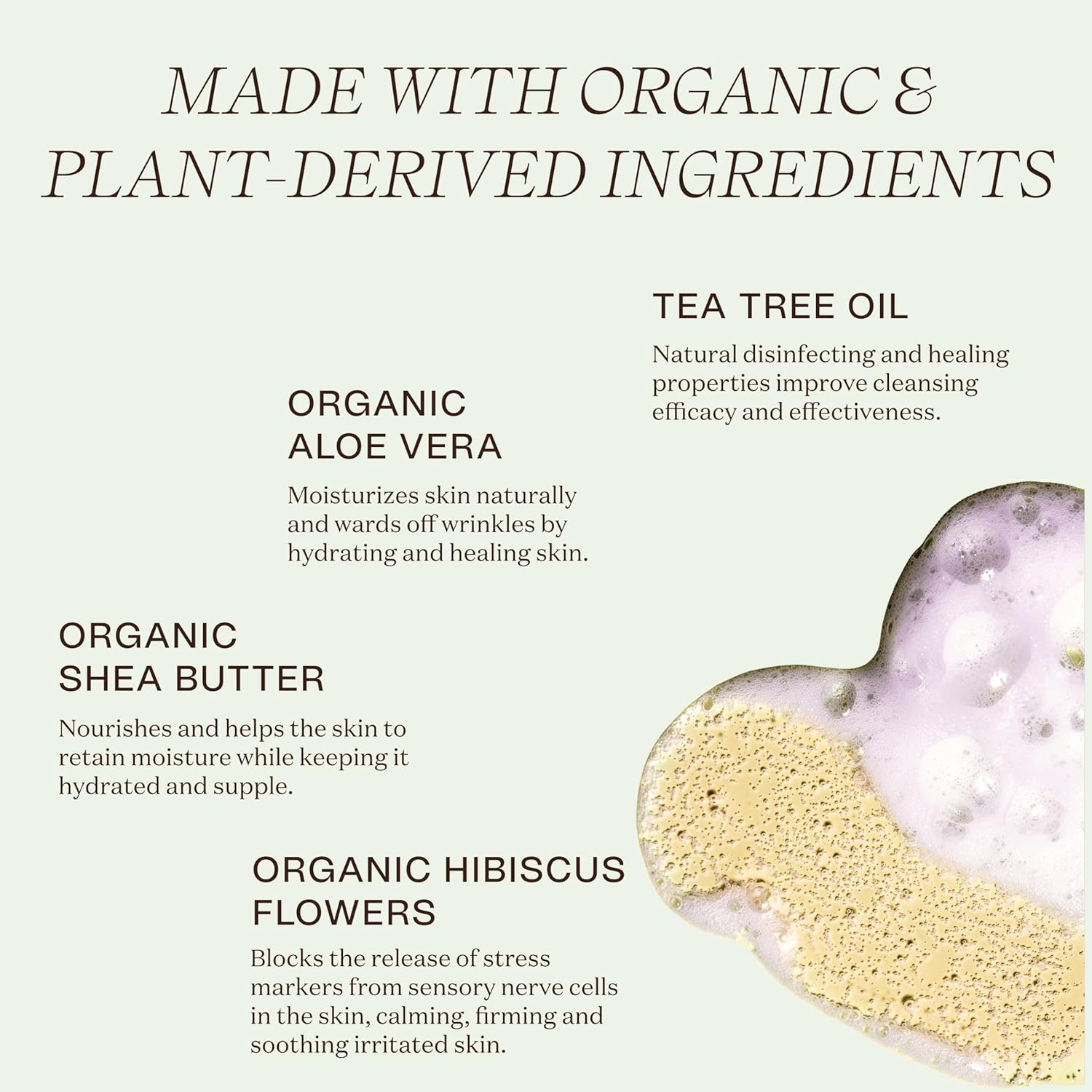
Coco glucoside and decyl glucoside are the names you will find in premium and clean-beauty formulas. Both are derived from plant sugars (usually coconut or corn) and belong to the alkyl polyglucoside (APG) family — a class that Well+Good’s ingredient feature “The Difference Between Coco Glucoside and Decyl Glucoside” describes as one of the most biocompatible surfactant families available in modern formulation.
The mechanism that makes glucosides gentle is the same mechanism that makes them less dramatic as foam producers: their molecular structure is inherently mild on lipid-rich environments, meaning they do not strip the skin barrier nearly as aggressively as sulfates. Dermatologists frequently recommend glucoside-based washes for eczema, rosacea, and post-procedure skin — not because they are medically validated treatments, but because their low irritation potential makes them a conservative, safe default.
The tradeoffs are real, though:
- Foam: Glucosides produce a lighter, less dense lather than sulfates. Some consumers read thin foam as “not cleaning well,” even though lather has no direct relationship to cleansing efficacy. Formulators often add secondary surfactants (cocamidopropyl betaine, sodium cocoamphoacetate) to boost the foam profile without compromising mildness.
- Price: Plant-derived APGs cost significantly more to source than SLS or SLES, which is one honest reason glucoside-forward body washes cluster in the $20–$120+ price range. The ingredient cost is real, not purely marketing.
- Rinsability: At higher concentrations, some glucoside formulas leave a subtle slip or conditioning feel. This is a feature or a bug depending on whether your skin is dry or acne-prone.
The honest summary: Glucosides are the right call for sensitive, condition-specific, or compromised skin — and for anyone who wants formulations that align with biodegradable, low-irritant clean-beauty principles. The cost premium is legitimate. The foam difference is cosmetic and does not affect cleaning power.
ATTITUDE
$24.87
In stock on Amazon
Check price on AmazonBy the Numbers
| Surfactant | Typical Cost to Formulate | Skin Barrier Impact | Lather Intensity | Common Price Tier |
|---|---|---|---|---|
| SLS | Very low | High disruption potential | Dense, rich | $3–$12 |
| SLES | Low | Moderate | Moderate–rich | $8–$22 |
| Glucosides | Moderate–high | Low | Light–moderate | $18–$120+ |
Sources: Environmental Working Group Skin Deep ingredient profiles; Cosmetics Info manufacturer data; naturalbodycleansers.com price-per-wash database (updated Q1 2026).
How to Read Any Body Wash Label in Under 60 Seconds
INCI lists are ordered by concentration, highest to lowest. The surfactant system almost always sits near the top — typically within the first five or six ingredients. Here is the pattern to look for:
If you see “sodium lauryl sulfate” in positions 2–4: This is an SLS-dominant formula. Fine for resilient, oily skin. Approach with caution if your skin barrier is compromised.
If you see “sodium laureth sulfate” without “sodium lauryl sulfate”: SLES-only formula. Gentler, still technically sulfate-containing. Read third-party certification status if 1,4-dioxane is a concern for you.
If you see “coco glucoside,” “decyl glucoside,” or “lauryl glucoside” in the first three positions: You are in APG territory. Check whether secondary surfactants lower on the list add mildness or lather boost — cocamidopropyl betaine is a mild amphoteric surfactant often added for foam enhancement; sodium cocoyl isethionate is another mild option that improves rinse feel.
The “sulfate-free” label alone tells you almost nothing. As Byrdie’s sulfate-free body wash overview notes, the claim can mean glucosides, or it can mean a different irritating surfactant class entirely. Verifying the INCI yourself takes thirty seconds and is always worth doing.
Who Should Prioritize What: A Clear Decision Rule
The intermediate reader has likely navigated at least one label with a blend of surfactants and wondered whether the premium was warranted. Here is the explicit if-then framing:
If your skin is normal to oily, you are budget-conscious, and you have no diagnosed skin conditions: SLES-based formulas at the $8–$22 tier are defensible. Look for versions with low-irritant secondary surfactants and fragrance-free options if you want to hedge. Brands like Everyone and Dove Sensitive Skin use SLES in straightforward, well-tolerated formulas that sit comfortably in the budget tier. You do not need to upgrade unless something changes.
If you have eczema, rosacea, post-procedure skin, or consistent dryness and tightness after washing: Move to glucoside-first formulas. The premium is real but proportionate to the benefit. Nécessaire’s body wash (which uses coco glucoside as its primary surfactant) and Ursa Major’s Sublime Body Wash sit in the $25–$40 range — a workable entry point into APG-forward formulation. Read the INCI, not the marketing.
If you are a spa professional or boutique amenity curator sourcing at volume: The glucoside question becomes a liability question. A guest with a contact allergy or eczema reacting to sulfates is a service failure. Premium APG-based formulas from Susanne Kaufmann, Aesop, or Grown Alchemist are the conservative professional default, and certification documentation (COSMOS, Ecocert) creates a paper trail that is useful for sustainability-minded properties.
If fragrance sensitivity is the primary driver: Surfactant class matters less than fragrance load. As Healthline’s SLS ingredient explainer points out, barrier disruption from surfactants and sensitization from fragrance compounds are separate irritation pathways. An unscented SLES formula will often outperform a glucoside formula with a heavy natural-fragrance blend for reactive skin. Check the INCI for “fragrance,” “parfum,” or named essential oils before defaulting to a more expensive surfactant tier.
If you want the cleanest possible certification story: SLS and SLES are incompatible with COSMOS certification. Glucosides are the required surfactant family for certified-organic or natural-standard body washes. EWG Verified status — tracked through the Environmental Working Group’s Skin Deep database — adds another layer of scrutiny on residual contaminants. If certification is the filter, let that narrow your shortlist before you compare price points.
The surfactant conversation sounds technical, but the underlying logic is simple: match the cleansing agent’s strength to your skin’s tolerance, verify the label against the front-of-pack claim, and price in the legitimate cost of more complex ingredients when you are spending more. The right answer depends entirely on the skin you are working with — and now you have the vocabulary to make that call with confidence.