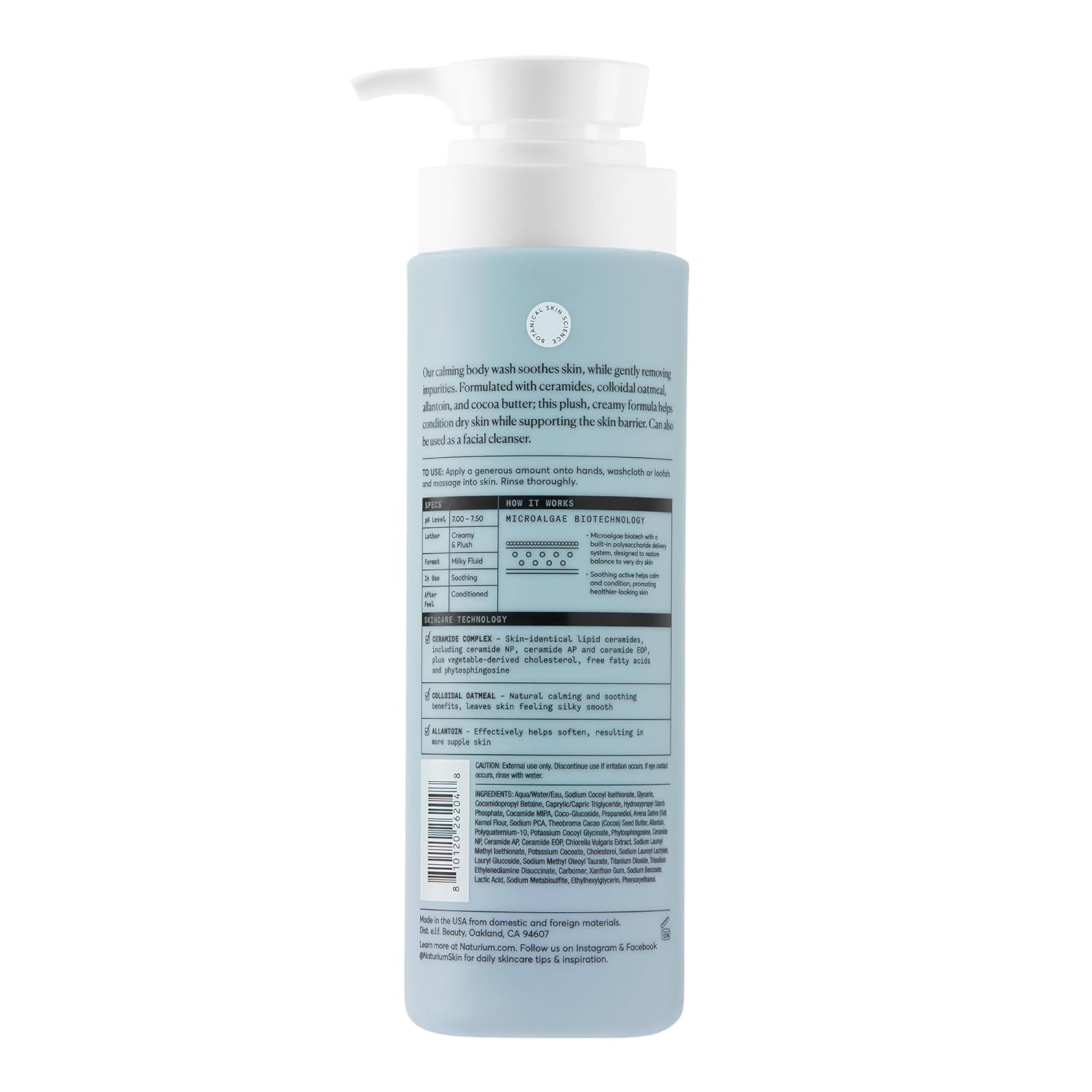
Picture this: you’re standing in the body wash aisle — or scrolling through a brand’s product page at midnight — and you see a label that reads “prebiotic oat, ceramides, and niacinamide.” It sounds impressive. Maybe even clinical. But what does any of that actually mean for your skin, and does a rinse-off body wash even deliver on those promises? Those are fair questions, and they deserve straight answers. Prebiotic oat refers to compounds in oats that feed the beneficial microorganisms living on your skin. Ceramides are lipids (a type of fat) that form the “mortar” between your skin cells, keeping moisture in and irritants out. Niacinamide is a form of Vitamin B3 that addresses uneven tone, inflammation, and barrier function. All three are legitimate, well-researched ingredients — the issue is whether a shower product, which you rinse off within 60 seconds, can actually deliver them at a meaningful level. We’ve read the labels, checked the certifications, and compared formulas across price tiers so you don’t have to.
Why Rinse-Off Delivery Is the Real Question
Before you can evaluate whether a body wash earns its marketing claims, you need a decision frame. The key variable isn’t whether an ingredient is good — all three of these are — it’s whether it survives the rinse-off window at a concentration that matters.
Here’s how the mechanism actually breaks down:
Colloidal oatmeal (the prebiotic oat fraction): This is the most rinse-off-friendly of the three. Colloidal oatmeal forms a film on the skin’s surface during contact time, and some of that film persists after rinsing. The FDA formally recognizes colloidal oatmeal as a skin protectant (per the FDA’s OTC monograph for skin protectants), and the National Eczema Association cites it as one of the few topically applied ingredients with enough evidence to carry real soothing claims in wash-off formats. The prebiotic benefit — specifically, its beta-glucan content feeding the skin microbiome — is more nuanced and still being actively researched, but the base soothing and film-forming function is well-established.
Ceramides: This is where the tradeoff gets real. Ceramides are lipids, and rinse-off products are primarily water-based with surfactants designed to clear oil from skin. The physics work against you: most of the ceramide you apply washes straight down the drain. Byrdie’s comprehensive guide to best body washes for dry skin notes this tension directly — ceramide-rich body washes show the most benefit in leave-on formats, but some formulators have addressed this by building a surfactant system that’s mild enough to avoid stripping the ceramides already present in the skin. That’s a different — and arguably more honest — claim than “adding ceramides back.” Look for ceramide NP, AP, or EOP on the INCI list; EWG Skin Deep rates these as low-hazard, well-tolerated ingredients.
Niacinamide: Vitamin B3 is water-soluble, which is both its advantage and its limitation in a body wash context. Water-soluble actives can penetrate briefly during contact time, but meaningful effects on hyperpigmentation or sebum regulation — the claims most commonly associated with niacinamide — require sustained exposure. Healthline’s overview of niacinamide in skincare consistently emphasizes leave-on application as the standard for efficacy data. In a body wash, you’re getting the anti-inflammatory benefit during contact (which is real and useful for sensitized or acne-prone chest and back skin), but not the tone-correcting depth you’d see in a leave-on serum.
Reading the INCI List Like a Practitioner
You already know that INCI order matters — ingredients are listed from highest to lowest concentration. But there are two specific traps worth naming explicitly for these three actives.
The “sprinkle” problem: A brand can list ceramide NP on a label with it present at 0.001% and technically not be lying. There’s no regulatory minimum concentration for most of these actives in cosmetics. Cosmetics Info notes that ceramide concentrations in commercially available products range from under 0.1% to about 5% — a 50× difference that the label won’t show you. The practical read: if ceramide NP appears after fragrance, after preservatives, or in the last 20% of a long ingredient list, it is almost certainly decorative.
The oat name confusion: “Avena Sativa (Oat) Kernel Flour,” “Avena Sativa Kernel Extract,” and “Colloidal Oatmeal” are not the same thing. Only colloidal oatmeal has the FDA monograph backing. Oat kernel flour is a texture agent; oat extract provides some beta-glucan activity but at widely varying concentrations. Cosmetics Info’s colloidal oatmeal ingredient profile draws this distinction clearly. If a brand is claiming soothing or barrier-protection properties, “Colloidal Oatmeal” in the first half of the INCI list is the marker you want.
The niacinamide threshold: Published formulation guidance (including Paula’s Choice Ingredient Dictionary’s niacinamide entry, which draws on peer-reviewed literature) identifies 2–5% as the effective range for visible results in leave-on formats. In a rinse-off, you’d want a meaningfully higher starting concentration to account for dilution and wash time. If niacinamide appears below the 1% threshold position on the label — typically after preservatives like phenoxyethanol — treat it as a supporting cast member, not a lead.
The Price-Tier Tradeoff, Named Explicitly
This is where the decision frame gets concrete. Here’s an honest breakdown of what you’re actually buying at each tier:
$9–$20 (mass market): Products like Aveeno Skin Relief Body Wash (colloidal oatmeal-forward, unfragranced) and CeraVe Hydrating Body Wash (ceramide NP, ceramide AP, niacinamide) represent the clearest value case. CeraVe’s formulas are developed with dermatologist input and the ceramide / niacinamide combination appears high enough in the INCI to be functional — not merely decorative. You’re not getting luxury sensory experience, but the ingredient-to-cost ratio is hard to argue with. Reviewers at Byrdie consistently rate CeraVe’s body wash line as the benchmark for barrier-repair efficacy per dollar.
$22–$45 (mid-range): Brands like Nécessaire and Osea work in this range. Nécessaire’s The Body Wash (fragrance-free version) lists niacinamide visibly in the mid-section of a clean INCI list, and the product is Leaping Bunny certified and EWG Verified — a meaningful third-party signal. Osea’s Undaria Algae Body Wash is more about marine actives than the oat/ceramide/niacinamide trio specifically; the brand’s strength is fragrance-thoughtfulness and certification rigor rather than barrier-repair specificity. At this tier, you’re paying for a cleaner preservative system, certifiable claims, and a better sensory experience. The active delivery isn’t necessarily stronger than CeraVe — but the absence of potential irritants (synthetic fragrance, certain preservative blends) may matter more for sensitized skin.
$50–$120+ (premium/luxury): Augustinus Bader’s The Body Cleanser features their proprietary TFC8 complex, which includes amino acids and vitamins alongside barrier-relevant lipids. Grown Alchemist’s Hydra-Restore Cream Cleanser uses a ceramide-analogue approach via phospholipids. At this tier, you are partly paying for formulation elegance — stabilized actives, sophisticated delivery systems — but you are also significantly paying for brand architecture, packaging, and fragrance experience. The honest tradeoff: if your skin is reactive and fragrance-sensitive, the extra cost may not buy you meaningfully better barrier repair than mid-range or even mass-market options. If you are curating a professional amenity environment or your personal ritual matters to your wellness practice, that full-value calculus is different.
By the Numbers
| Active | Effective range (leave-on reference) | Rinse-off practical threshold | Label signal to look for |
|---|---|---|---|
| Colloidal Oatmeal | 1–2% (FDA monograph minimum) | ≥1%, in first half of INCI | ”Colloidal Oatmeal” listed by name |
| Ceramide NP / AP / EOP | 0.5–5% (varies by study) | Listed before fragrance/preservatives | Any ceramide before phenoxyethanol |
| Niacinamide | 2–5% (leave-on studies) | Mid-INCI at minimum | Listed in first 60% of ingredient list |
The Fragrance-Sensitivity Overlay
One thing the marketing doesn’t surface: for fragrance-sensitive or eczema-prone skin, the presence of these three actives may be less important than what else is in the formula. A ceramide-containing body wash that also contains linalool, limonene, or benzyl alcohol (common fragrance components that must be disclosed on EU-market labels) may do more harm than good to a compromised barrier — regardless of the ceramide content.
The practical move: cross-reference your shortlist against EWG Skin Deep’s fragrance allergen filters, and look for National Eczema Association Seal of Acceptance products (which require fragrance-free formulation and surfactant safety review). The NEA’s seal list is searchable and updated periodically — it’s a faster verification step than parsing every INCI alone.
Well and Good’s reporting on the NEA seal program (in their clean beauty certification roundup) notes that the seal requires brands to submit full formulations for review, not just marketing claims — making it one of the more rigorous third-party marks available for condition-specific shoppers.
If X, Then Y: Your Decision Rule
Here’s the plain-language version of everything above:
If your skin is barrier-compromised, eczema-prone, or post-prescription-treatment sensitive — prioritize colloidal oatmeal (by name, not just “oat extract”) in the first half of the INCI list, and look for the NEA Seal or EWG Verified mark. CeraVe and Aveeno are the evidence-backed mass-market choices here; Nécessaire (fragrance-free version) is the logical step-up if you want cleaner ancillary ingredients and certification coverage.
If your primary goal is hyperpigmentation on the body (chest, back, shoulders) — niacinamide in a body wash is a supporting act, not a solution. Use it in your wash if it’s there and well-positioned on the label, but invest your real budget in a leave-on body treatment or lotion with a confirmed 2–5% niacinamide concentration. The body wash is your platform; the leave-on is your active delivery vehicle.
If you’re sourcing for a professional or amenity context — the ceramide/oat/niacinamide combination is a credible, easy-to-communicate benefit story for guests or clients. At the luxury tier (Augustinus Bader, Grown Alchemist), the formulation story holds up to informed scrutiny; the higher cost reflects genuine formulation investment plus brand positioning. For volume purchasing where cost matters, CeraVe’s body wash line offers the strongest evidence-to-price argument in the category.
If you’re fragrance-sensitive above all else — the active tier is secondary. A fragrance-free, NEA-sealed, or EWG Verified formula at any price point will outperform a luxuriously formulated product that includes fragrance components your skin can’t tolerate.
The bottom line: these three ingredients are real, and they belong on your radar. But the label is a starting point, not a proof — INCI position, format (rinse-off vs. leave-on), and what else is in the bottle are the variables that separate a functional barrier wash from a well-marketed one.