Most men’s body washes get chosen in about twelve seconds — grabbed off a shelf because the bottle is a color that feels appropriately “not floral,” or because the brand ran a good ad during a game. That’s a reasonable shortcut when you’re not thinking about it. But if you’ve started reading labels on your moisturizer, your shampoo, maybe your laundry detergent — you’ve probably already noticed that the same logic applies to your cleanser. A body wash is, functionally, a delivery system for surfactants (the cleaning agents that lift dirt and oil from your skin) and conditioning agents (the ingredients that put some of what the surfactants strip back in). The ratio and quality of those two categories determines whether your skin feels tight and irritated after a shower or genuinely comfortable. This guide is for the reader who already knows something is wrong with the drugstore default — and wants a clear framework to make a better call.
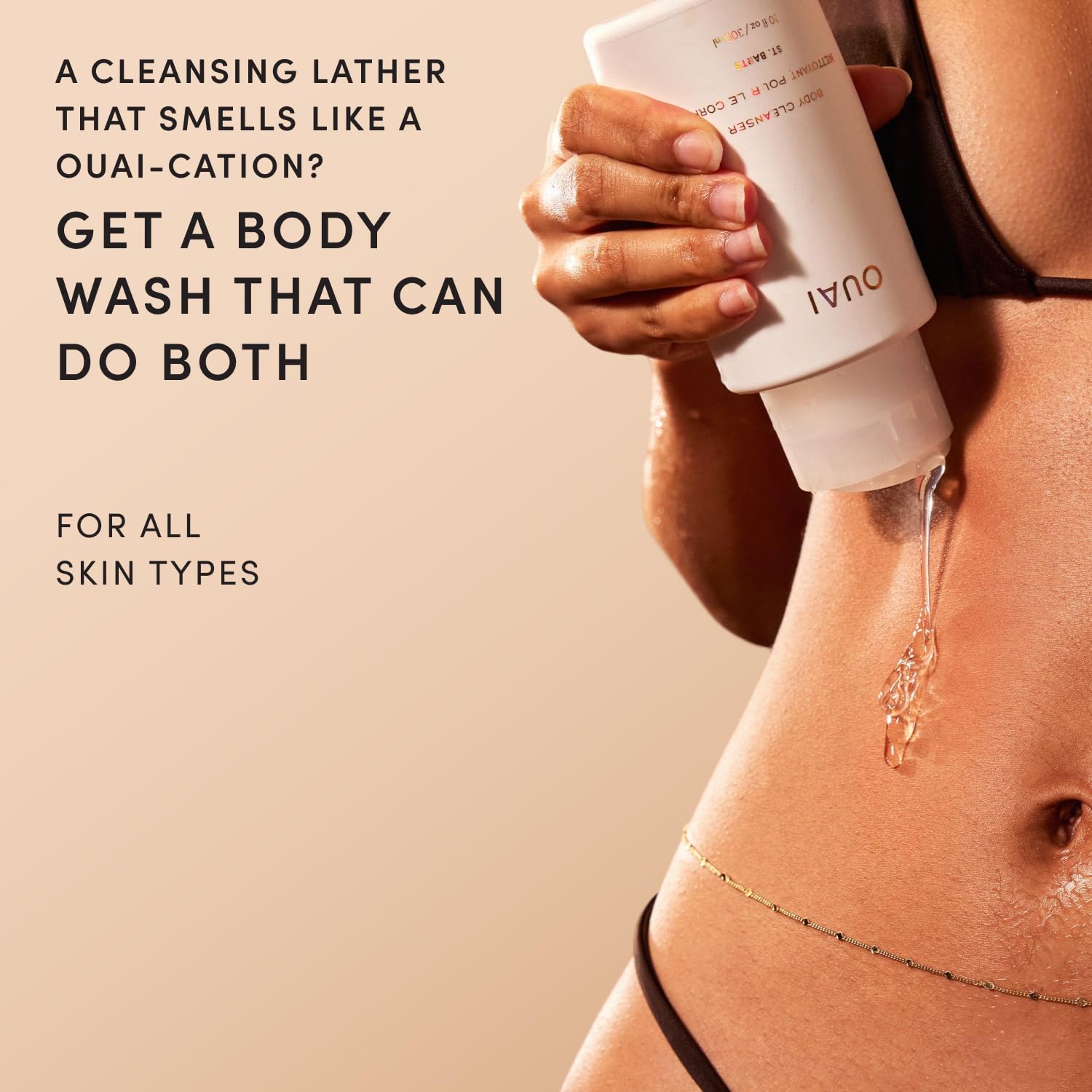
| EDITOR'S PICK[Baxter of California Invigorati…](https://www.amazon.com/dp/B06XKDV7BP?tag=greenflower20-20) | Mid-tier[OUAI Body Cleanser](https://www.amazon.com/dp/B0CBKQL6NM?tag=greenflower20-20) | Budget pick[DOVE MEN Sandalwood + Cardamom…](https://www.amazon.com/dp/B0DX8Q7RSK?tag=greenflower20-20) | |
|---|---|---|---|
| Size | 16 Fl Oz | — | 26oz |
| Skin type | All Skin Types | — | — |
| Key oils | Italian Lime & Pomegranate | Jojoba Oil, Rosehip Oil | Sandalwood + Cardamom Oil |
| Sulfate free | — | ✓ | ✓ |
| Paraben free | — | ✓ | ✓ |
| Fragrance type | Italian Lime & Pomegranate | St. Barts | Sandalwood + Cardamom |
| Price | $35.00 | $28.00 | $10.97 |
| See on Amazon → | See on Amazon → | See on Amazon → |
Why the “Men’s” Formulation Question Actually Matters
Here’s the honest version: there is no biological law requiring men’s skin to be cleaned with a different molecule than women’s skin. Skin physiology differs somewhat — research published in the Journal of Investigative Dermatology has noted that men’s skin tends to run slightly thicker, oilier in the T-zone, and with a marginally lower surface pH after adolescence — but these are tendencies, not absolute rules, and they don’t justify the reformulation chasm you’d expect from browsing a drugstore aisle.
What does matter is that most products marketed to men lean heavily on two trade-offs that ingredient-aware buyers should recognize immediately:
1. Aggressive surfactant choices. The “powerful clean” positioning that dominates men’s marketing often translates to sodium lauryl sulfate (SLS) — a surfactant (cleaning agent) that is effective at removing oil but strips the skin barrier aggressively in the process. Per Healthline’s overview of SLS, it’s one of the most irritating of the common surfactants, and it’s implicated in the kind of post-shower tightness, dryness, and eczema flare-ups that many men don’t connect back to their body wash because it’s never occurred to them to look. By contrast, gentler alternatives like cocamidophryl betaine (a coconut-derived cleanser), sodium cocoyl isethionate (SCI), or decyl glucoside (a sugar-based surfactant) clean effectively at a meaningfully lower irritation cost.
2. Fragrance loading. Men’s products are among the heaviest fragrance users in personal care. The word “fragrance” (or “parfum” on an INCI list) on a label is a single ingredient slot that can legally contain dozens of individual aroma chemicals — some of which are common allergens. The EWG Skin Deep Cosmetics Database flags undisclosed fragrance blends specifically because of this opacity. If you’re dealing with sensitized skin, keratosis pilaris, or eczema-prone patches — common concerns that dermatologists at Well+Good note are frequently under-treated in male patients — fragrance is often the first variable worth eliminating.
Reading the Ingredient List: The Three Tiers That Actually Matter
You don’t need a chemistry degree here. You need to recognize the pattern.
Tier 1: The primary surfactant (ingredients 1–3 on the list) Whatever appears in the first one to three positions is doing the most work. Sodium lauryl sulfate (SLS) and sodium laureth sulfate (SLES) are the most common — SLES is a milder sulfate variant of SLS, though it’s still a stronger cleanser than the alternatives listed below. If the formula leads with cocamidophryl betaine, sodium cocoyl glutamate, or any “-glucoside” (coco-glucoside, decyl glucoside), you’re looking at a gentler base. The Cosmetics Info surfactants overview confirms that glucoside-family and amino acid-based surfactants (glutamate, glycinate, taurate) are among the lowest-irritation options available in modern formulation.
Tier 2: The moisturizing and barrier-repair ingredients (mid-list) Look for glycerin (a humectant that pulls moisture into the skin), panthenol (vitamin B5, supports the skin barrier), niacinamide (vitamin B3, anti-inflammatory and barrier-supportive), and any listed plant oils — jojoba, sunflower, marula. These are the ingredients that offset what the surfactants remove. Their presence mid-list (not the last 1–2 percent of the formula) signals that the brand actually invested in them.
Tier 3: Fragrance and preservatives (end-list) Fragrance should be disclosed, ideally with individual components listed (many clean-leaning brands now do this). Preservatives like phenoxyethanol are broadly accepted as safe at formulation-standard concentrations. Parabens (methylparaben, propylparaben) remain a category preference issue — the EWG rates them with some concern; major regulatory bodies in the EU and US have broadly cleared them at typical use levels. Know your own threshold here.
The Price-Per-Wash Reality Check
By the numbers:
| Tier | Example Price | Est. Washes Per Bottle | Cost Per Wash |
|---|---|---|---|
| Drugstore (Dr. Bronner’s 32 oz) | ~$14 | 64 (at 2 tbsp/use) | ~$0.22 |
| Mid-range (Nécessaire Body Wash, 12 oz) | ~$30 | 24–30 | ~$1.00–$1.25 |
| Premium (Aesop Geranium Leaf Body Cleanser, 16.9 oz) | ~$48 | 34–40 | ~$1.20–$1.41 |
| Luxury (Augustinus Bader The Body Wash, 8.4 oz) | ~$95 | 17–20 | ~$4.75–$5.59 |
The math here does two things. First, it normalizes the sticker shock on premium options — at roughly $1.20 per wash, Aesop isn’t dramatically more expensive per use than a mid-range alternative, especially if you’re comparing it to the dry, irritated skin that might require additional products to manage. Second, it reveals the honest case for the drugstore: Dr. Bronner’s castile soap formulation (pure-castile, meaning it’s primarily saponified coconut and palm oil — a classic, no-frills surfactant base) costs $0.22 per wash and, for many skin types, is genuinely adequate if diluted correctly.
Byrdie’s aggregated review coverage of men’s body washes consistently points to Nécessaire’s formula as a mid-range benchmark — glucoside-based surfactants, glycerin, niacinamide, and vitamin E in a fragrance-free option — that performs competitively with products twice its price. We’ve read the label, checked the certification, and compared it to similar formulas so you don’t have to: the ingredient architecture at the $30 tier from brands like Nécessaire and Ursa Major is often functionally superior to men’s-marketed products in the $15–$22 range that lead with SLS or SLES.
Condition-Specific Decision Framework
This is where “if X, then Y” actually earns its keep.
If you have eczema-prone or chronically dry skin: Eliminate SLS-led formulas first — full stop. Look for a glucoside or amino acid-based primary surfactant, glycerin in the top five ingredients, and either no fragrance or a fully disclosed natural fragrance. Osea’s Ocean Cleanser and Nécessaire’s fragrance-free variant are frequently cited in dermatology-adjacent editorial coverage for their minimal-irritant profiles. Avoid anything with menthol, eucalyptus, or high concentrations of essential oils, regardless of how “natural” the positioning is — these are common irritants on sensitized skin, per well+good’s coverage of dermatologist-recommended body cleansers.
If you have body acne (bacne) or keratosis pilaris (KP): Keratosis pilaris — those small, rough bumps typically on the upper arms or thighs — is caused by a buildup of keratin around hair follicles. Body acne shares some of the same mechanism. Both conditions respond to chemical exfoliants: salicylic acid (a beta-hydroxy acid that can penetrate the follicle) and glycolic or lactic acid (alpha-hydroxy acids that work at the surface). Look for these explicitly in the ingredient list. Ursa Major’s Fantastic Face Wash architecture — which they’ve extended into body-format products — and several Grown Alchemist formulations include AHA variants. Note: if using a leave-on retinol or AHA moisturizer separately, be thoughtful about layering; the skin barrier tolerates only so much acid contact in a given day.
If you’re fragrance-sensitive or shopping for a sensitized-skin household: The fragrance-free designation is your filter. Verify it on the INCI list directly — “unscented” is not the same thing; unscented products sometimes contain masking fragrances that neutralize smell without removing the chemical. Brands like Everyone (the $12 entry point), Nécessaire, and Dove Sensitive Skin (the unscented variant, which Dove explicitly formulates without fragrance) are well-documented in this lane.
If you’re a spa professional or amenity buyer sourcing in volume: The calculation shifts slightly. At volume, the per-unit cost compresses, but the brand positioning value of the amenity matters equally. Susanne Kaufmann, Bamford, and Aesop all offer trade programs and hospitality-tier purchasing — Aesop in particular has established hospitality partnerships that include refillable dispenser formats, which both reduce per-use cost and align with sustainability commitments that increasingly matter to boutique hotel guests. Check each brand’s professional inquiry channel directly; pricing and MOQs vary seasonally.
If you’re entering the category from a conventional product: Start with Dr. Bronner’s (pure-castile, diluted) or Everyone for Men — both are accessible price points, both are certified to meaningful third-party standards (Dr. Bronner’s holds USDA Organic; Everyone carries EWG Verified). Neither will feel identical to a SLS-heavy lather you’re used to, because the foaming behavior of gentler surfactants is genuinely different — less dramatic foam, same (or better) clean. Give it two weeks before concluding it “doesn’t work.” The tactile expectation of big lather is a learned preference, not a marker of efficacy.
The Clear Decision Rule
If you’re spending $0–$15 and want an honest upgrade: switch to a glucoside-based or castile formula at the same price point before moving up a tier. The formulation difference between a $14 Dr. Bronner’s and a $22 SLS-heavy men’s “performance” wash favors Dr. Bronner’s on every label metric.
If you’re spending $20–$45 and want to know whether premium is worth it: read the primary surfactant. If a mid-range product leads with SLS and a $45 option leads with coco-glucoside and backs it with niacinamide and glycerin, the $45 option is earning its price. If both lead with SLES and the mid-range has adequate humectants, save the difference.
If you’re at $50+: you’re paying for formulation philosophy, sourcing standards, and — honestly — the full sensory and brand experience. That’s a legitimate spend if those things matter to you. What you should verify is that the formula backs it up: a $95 body wash with SLS as the primary surfactant is not delivering the skin experience the price implies. Check the INCI list before the brand story.
The gym-bag grab made sense when you weren’t paying attention. You’re paying attention now — that’s the only thing that needed to change.