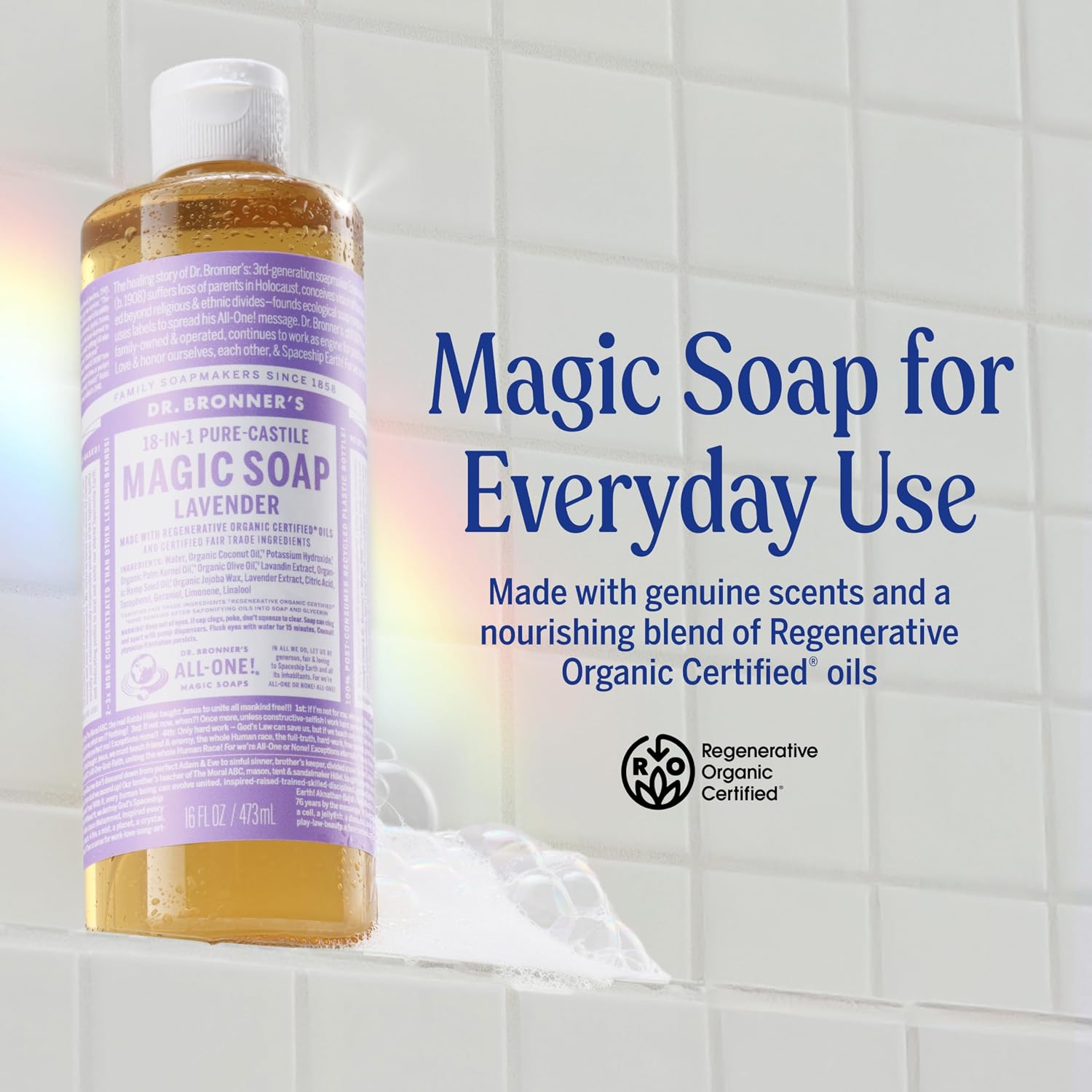
You’ve probably stood in the shower holding a bottle of Dr. Bronner’s — that impossibly busy label — and wondered whether the “pure-castile” claim actually means something for your skin, or whether it’s marketing dressed up in biblical scripture. Castile soap, at its most basic, is a soap made primarily from plant oils (olive oil is the original; coconut oil is common today) rather than animal fats or synthetic surfactants. The term “INCI list” — International Nomenclature of Cosmetic Ingredients — is simply the standardized ingredient list printed on every personal care product sold in the US and EU. Reading one for a castile formula takes about thirty seconds and tells you almost everything you need to know about how that cleanser will behave on your skin. This guide breaks down what those ingredients actually do, where castile shines, where it falls short, and how to decide whether it belongs in your routine or your client’s amenity kit.
What a Castile INCI List Actually Says (and Doesn’t)
Pull up Dr. Bronner’s Unscented Baby Pure-Castile Liquid Soap — the formula fragrance-sensitive shoppers reach for most — and the INCI list is almost startlingly short: Water, Potassium Olivate, Potassium Cocoate, Potassium Palm Kernelate, Glycerin, Tocopherol. That’s it for the unfragranced version.
Here’s what each ingredient is doing:
- Potassium Olivate / Cocoate / Palm Kernelate — these are the saponified (chemically converted) versions of olive, coconut, and palm kernel oils. Saponification is the process of reacting a fat with an alkali (here, potassium hydroxide) to produce soap and glycerin. The potassium salt form makes liquid soap; sodium salts make bar soap. CosmeticsInfo.org’s ingredient encyclopedia notes that potassium cocoate is a well-studied surfactant with a long safety record, while potassium olivate contributes emollient fatty acids that remain partially on the skin surface.
- Glycerin — a humectant (a substance that draws moisture toward the skin) produced naturally during saponification. Dr. Bronner’s leaves it in rather than skimming it out, which is one reason castile soap rinses differently from industrial bar soaps.
- Tocopherol — vitamin E, acting as an antioxidant preservative for the oil blend.
What the INCI list doesn’t tell you, but the chemistry does: true soap has a high pH, typically between 9 and 10. Your skin’s natural surface sits around pH 4.5 to 5.5 — what dermatologists call the “acid mantle.” The Beauty Brains podcast has covered this distinction extensively in their surfactant series, noting that the pH gap between soap and skin is the central variable practitioners need to understand before recommending a castile formula to anyone with a compromised barrier.
The pH Tradeoff: Where Castile Wins and Where It Costs You
This is the core decision frame for anyone selecting between castile and a modern syndet (synthetic detergent) body wash.
By the numbers:
| Format | Typical pH | Barrier disruption risk | Lather profile |
|---|---|---|---|
| True castile soap (liquid) | 9.0–10.0 | Moderate–high | Rich, creamy |
| Syndet body wash (glucoside-based) | 5.0–6.0 | Low | Light–moderate |
| SLS/SLES conventional body wash | 5.5–7.0 | Moderate | High |
Healthline’s reviewed overview of castile soap for different skin types flags the high alkalinity as the primary concern for eczema-prone, rosacea, or sensitized skin — populations that make up a significant slice of naturalbodycleansers.com’s readership. The acid mantle disruption from repeated high-pH cleansing isn’t theoretical: it transiently raises skin pH, which can compromise the skin’s enzyme activity and lipid barrier function. For a daily body wash used on large surface areas, that adds up.
Where castile earns its place:
- Ingredient minimalism: For fragrance-sensitive or contact-dermatitis-prone clients, a five-ingredient INCI list is genuinely valuable. The Environmental Working Group’s Skin Deep database rates Dr. Bronner’s Unscented Baby formula at a 1 (lowest hazard), with no flagged allergens in the unfragranced version.
- Dilution flexibility: Castile concentrate can be diluted 1:3 to 1:10 with water, which brings the effective lather volume up dramatically. The cost-per-wash math shifts considerably once you account for dilution — a $18 32 oz bottle used at a 1:4 ratio yields the equivalent of 128 oz of ready-to-use cleanser. That’s a strong argument for the budget-conscious segment and for practitioners sourcing amenity-scale volumes.
- Multi-surface utility: Well+Good’s explainer on bar soap switching notes that castile’s surfactant profile works on body, scalp, and household surfaces — a real advantage for minimalist or travel-focused consumers.
- Certified organic credentials: Dr. Bronner’s holds USDA National Organic Program certification on its oil inputs, a third-party verified claim that carries more weight than “natural” label language.
Where castile creates friction:
- Hard water incompatibility: Soap + hard water = soap scum — the insoluble calcium and magnesium salts of the fatty acids. If your client is in a hard-water market (which covers the majority of US cities, per USGS water hardness data), castile can leave a film on skin and tub surfaces alike. This is a chemistry outcome, not a product quality issue, and it’s something practitioners sourcing for hotel amenity programs in cities like Phoenix, Las Vegas, or Denver should factor in explicitly.
- Fragrant variants and the hidden allergen question: Dr. Bronner’s scented lines — Peppermint, Lavender, Rose, Almond — use essential oils, not synthetic fragrance. That matters for EWG scoring, but essential oils are not automatically hypoallergenic. Byrdie’s roundup of natural body washes notes that lavender and peppermint in particular carry documented sensitization potential in certain individuals. If fragrance sensitivity is the primary driver of a product decision, the Unscented Baby formula is the only castile option in the Dr. Bronner’s line that’s clean on that axis.
- No conditioning agents: Unlike syndet formulas from Nécessaire, Ursa Major, or Osea — which typically include glycol-based emollients, ceramides, or botanical extracts — castile soap’s INCI list carries no post-wash skin conditioning. What you get is a clean rinse, full stop. For dry or barrier-compromised skin, a body oil or lotion step becomes non-negotiable, not optional.
Castile vs. Glucoside-Based Cleansers: The Real Comparison
If you’re at the decision point between recommending castile and recommending a pH-balanced natural body wash, the glucoside-based formulas are the most meaningful comparison. Glucosides (coco-glucoside, decyl glucoside, lauryl glucoside) are mild surfactants derived from plant sugars and fatty alcohols, and they’re the backbone of most contemporary clean-beauty body washes at the $20–$45 price tier.
The tradeoff table looks like this in practice:
Castile soap (Dr. Bronner’s, ~$0.11–$0.18/oz at standard dilution):
- INCI: 5–8 ingredients
- pH: 9–10 (barrier-disrupting range)
- Fragrance-free options: yes (Unscented Baby)
- Third-party certification: USDA Organic, Fair Trade
- Best fit: minimalist routines, low-sensitivity skin, dilution flexibility, multi-use households
Glucoside syndet body wash (e.g., Nécessaire The Body Wash Fragrance-Free, ~$1.10/oz; Everyone 3-in-1 Soap Unscented, ~$0.20/oz):
- INCI: 15–30 ingredients typically
- pH: 5.0–6.0 (acid-mantle compatible)
- Fragrance-free options: widely available across tiers
- Third-party certification: varies (NSF/ANSI 305, EWG Verified, COSMOS are common)
- Best fit: sensitive, eczema-prone, or barrier-compromised skin; daily use without supplemental moisturizing step
The Beauty Brains’ surfactant episodes make the point clearly: glucosides are technically synthetic (plant-derived, but chemically processed), which puts some formulas in an awkward position with “natural” marketing claims. The practitioner takeaway — for spa buyers and wellness professionals especially — is that “natural” on a label doesn’t guarantee gentleness, and “synthetic” doesn’t indicate harm. The pH and the rinse profile matter more for skin outcomes than the origin story of the surfactant molecule.
If X, Then Y: The Decision Rules
This is where the ingredient analysis converts into a practical sourcing or recommendation framework.
If the primary driver is ingredient minimalism and fragrance-free credentials → Dr. Bronner’s Unscented Baby Pure-Castile Liquid Soap is a defensible pick. Read the EWG Skin Deep entry, confirm the INCI matches current production (reformulations happen; we’ve verified the label, checked the certification, and compared it to similar formulas so you don’t have to), and factor in a dilution protocol.
If the client or guest has eczema-prone, sensitized, or barrier-compromised skin → Do not recommend castile as a daily body wash. The pH mismatch is a real variable. Redirect toward a pH-balanced glucoside formula — the Everyone brand Unscented 3-in-1 holds the entry tier; Ursa Major Essential Face + Body Wash or Nécessaire The Body Wash hold the mid range — and flag that the moisturizing step is structural, not optional.
If the use case is a hotel amenity program in a hard-water market → Castile creates a logistical problem at scale (soap scum, guest complaints, linen residue). A syndet formula in recyclable or refillable packaging — Aesop’s Reverence Aromatique Hand Wash, Bamford’s botanical body range — is a better fit for the premium tier, and Nécessaire or Everyone covers the mid-tier amenity slot cleanly.
If the driver is cost-per-wash at volume → Castile at 1:4 dilution is genuinely competitive. Run the math on your specific dilution ratio against the per-ounce cost of the syndet alternatives you’re considering. At standard retail pricing in mid-2026, a concentrated castile formula diluted to a 1:4 ratio costs approximately $0.14–$0.22 per effective ounce — comparable to or below most mid-tier syndet washes.
If fragrance sensitivity is the issue but the client wants a scented experience → Castile’s essential-oil-scented variants are not the answer. Look instead for formulas using allergen-screened fragrance-free botanical extracts (e.g., Susanne Kaufmann’s fragrance-free body range, or Grown Alchemist’s Body Cleanser in fragrance-free variant) where the scent desire is met through non-allergenic means or simply deferred.
The castile INCI list isn’t complicated — it’s actually one of the most transparent documents in body care. What it reveals is a cleanser that does one thing exceptionally well (clean, with minimal ingredient risk) and asks you to manage the tradeoffs consciously. For the practitioner building out a recommendation framework or an amenity program, that clarity is the value. Know the pH, know the water hardness, know the skin type — and the castile decision almost makes itself.