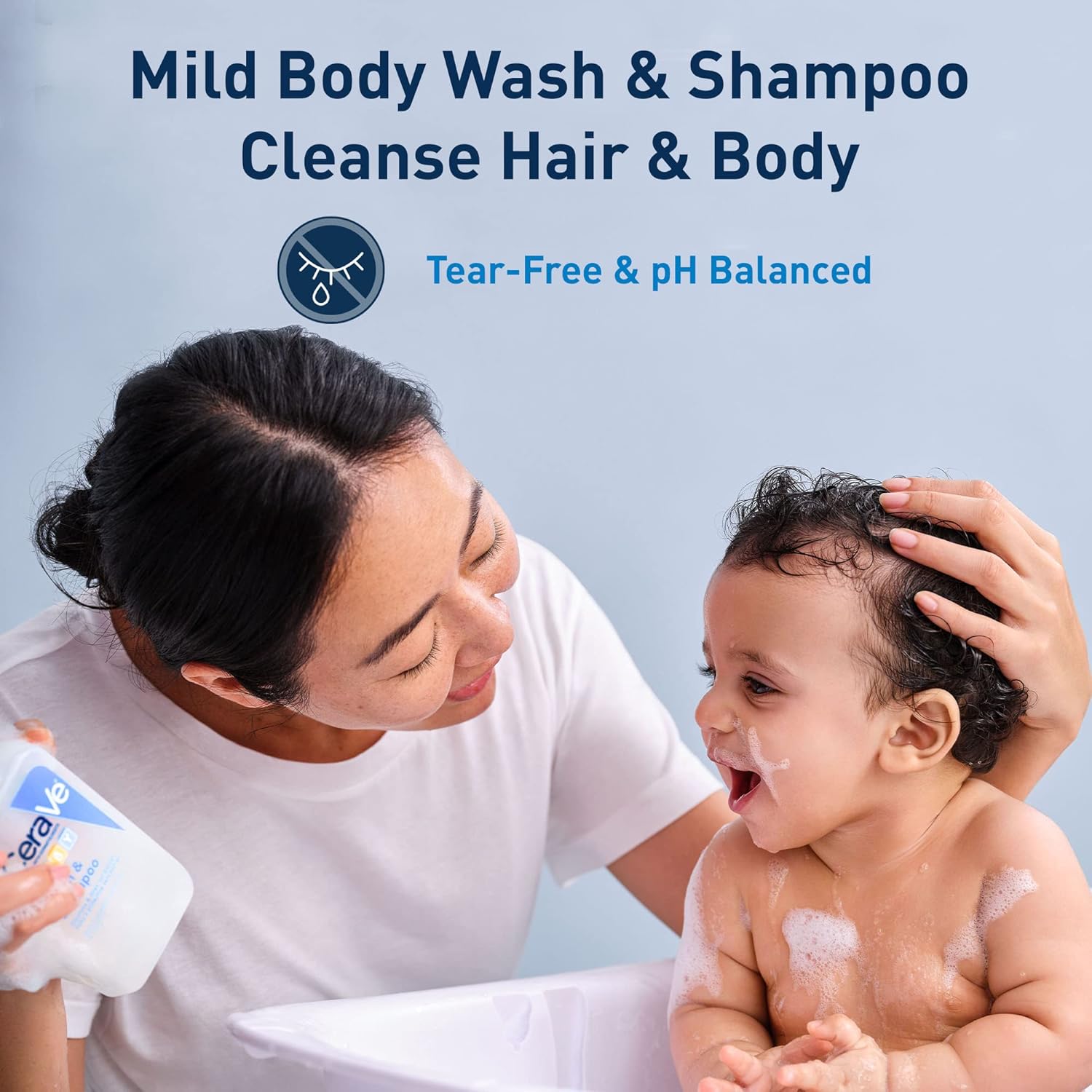
Picture this: you’re standing in the baby aisle, holding two bottles that both say “gentle,” “natural,” and “pediatrician tested.” One costs $9, one costs $28. Both have cheerful pastel labels. Neither tells you what’s actually in them in any useful way. If your baby or toddler has eczema-prone skin — meaning skin that’s extra reactive, prone to dry patches, redness, and itching — this moment matters more than it looks. Eczema (clinically called atopic dermatitis) is a condition where the skin’s outer protective barrier is compromised, making it easier for irritants to get in and moisture to escape. Even a “gentle” wash with the wrong surfactant (that’s the cleansing ingredient that creates lather and lifts dirt) can strip what little barrier function is left. This guide cuts through the marketing and gives you a clear framework for evaluating any baby or toddler body wash before you commit.
If you already know your INCI lists from your ingredient-decoder apps, and you’ve read the National Eczema Association’s accepted product seal criteria, you’re in the right place. We’ve read the labels, checked the certifications, and compared formulas across price tiers so you don’t have to do it from scratch.
| EDITOR'S PICK[Aveeno Baby Daily Moisture Gent…](https://www.amazon.com/dp/B004L5JCZ4?tag=greenflower20-20) | Mid-tier[Eucerin Baby Eczema Relief Crea…](https://www.amazon.com/dp/B08BB2VV68?tag=greenflower20-20) | Budget pick[Baby Dove Derma Care Soothing W…](https://www.amazon.com/dp/B08CLM9H7Y?tag=greenflower20-20) | |
|---|---|---|---|
| Headline active | Oat extract | Colloidal oatmeal | Colloidal oatmeal |
| Fragrance | Lightly scented | Fragrance free | — |
| Tear-free | ✓ | — | — |
| pH balanced | ✓ | — | — |
| Size | — | 13.5 fl oz | 13 oz |
| Price | $19.47 | $12.99 | $7.47 |
| See on Amazon → | See on Amazon → | See on Amazon → |
Why ‘Gentle’ Is a Marketing Word, Not a Safety Standard
Here’s the uncomfortable truth: in the U.S., the word “gentle” on a personal care label is unregulated. The FDA does not define it, the Personal Care Products Council does not certify it, and no third-party body audits whether a brand’s “gentle” claim holds up against clinical benchmarks. The same goes for “mild,” “pure,” and — with some important exceptions — “natural.”
This matters acutely for eczema-prone skin because the research is clear. The American Academy of Dermatology’s eczema bathing guide specifically recommends cleansers that are fragrance-free and dye-free, with a pH close to skin’s natural range (roughly 4.5–5.5). A wash that’s technically “natural” but scented with lavender essential oil — a common sensitizer — can trigger a flare just as readily as a synthetic fragrance blend.
The terms worth anchoring to instead:
- National Eczema Association (NEA) Seal of Acceptance — a legitimate third-party designation requiring that a product be free of ingredients known to irritate eczema-prone skin. As of mid-2026, the NEA lists accepted products on their website and updates the database periodically. Worth cross-referencing.
- Fragrance-free vs. unscented — these are not the same. “Unscented” can mean the brand added a masking fragrance to cover chemical odors. “Fragrance-free” means no fragrance compounds, masking or otherwise. For sensitized skin, fragrance-free is the correct target.
- EWG Verified — the Environmental Working Group’s verification program (documented in the EWG Skin Deep Database) flags specific hazard concerns. It doesn’t certify clinical gentleness, but it eliminates a useful set of problematic ingredients including certain preservatives and hormone-disrupting compounds.
The decision rule here is simple: if a product doesn’t hold at least one externally audited designation — NEA Seal, EWG Verified, or a USDA Certified Organic seal for botanical ingredients — its “gentle” claim is self-reported marketing.
Surfactant Choices: The Real Differentiator Between Formulas
Surfactants are the ingredient category that most parents never read and that most directly determines whether a wash will compromise or respect an eczema-prone skin barrier. This is where being ingredient-literate pays off.
The hierarchy, from most to least appropriate for eczema-prone skin:
Glucosides (best option): Coco-glucoside, decyl glucoside, and lauryl glucoside are derived from plant sugars and fatty alcohols. They’re mild enough that cosmetic chemist commentary (including analysis published at thebeautybrains.com) consistently notes they produce significantly less irritation than sulfate-based alternatives. They also happen to be biodegradable and compatible with organic formulations. Downside: they produce less lather, which some caregivers misread as “not cleaning well.” Lather volume has no correlation with cleansing efficacy — that’s worth internalizing.
Amphoteric surfactants (good option, context-dependent): Cocamidopropyl betaine and sodium cocoamphoacetate are “amphoteric,” meaning they can behave as either a positive or negative ion depending on pH. They’re frequently used as secondary surfactants to boost mildness in combination formulas. CosmeticsInfo.org’s safety assessment of cocamidopropyl betaine notes it has a low irritation profile when properly rinsed — an important caveat for bath products that may linger on skin.
SLES (use with caution): Sodium laureth sulfate is the milder sibling of SLS (sodium lauryl sulfate). As Healthline’s overview of SLS vs. SLES notes, the ethoxylation process that converts SLS to SLES reduces irritation potential meaningfully — but SLES still strips lipids from the skin barrier at higher concentrations. For a healthy-skinned child it’s probably fine. For eczema-prone skin, especially during flare periods, it’s a tradeoff worth minimizing.
SLS (avoid for eczema-prone skin): Sodium lauryl sulfate is the standard against which most irritation studies are measured. It appears in plenty of baby washes — even some with “gentle” branding — because it’s inexpensive and lathers visibly. The EWG Skin Deep Database rates SLS as a moderate hazard for skin irritation. For any child managing eczema, SLS in a daily wash is a meaningful risk.
By the numbers:
| Surfactant Type | Irritation Potential | Typical Price Impact | Eczema Recommendation |
|---|---|---|---|
| Glucosides (coco-, decyl-) | Low | Moderate–High | ✓ First choice |
| Amphoteric (betaines) | Low–Moderate | Low–Moderate | ✓ Acceptable |
| SLES | Moderate | Low | △ Use with caution |
| SLS | High | Low | ✗ Avoid |
Reading the Preservative and Fragrance Lines
Once you’ve cleared the surfactant screen, the next two landmines are preservatives and fragrance compounds — both of which appear frequently in otherwise reasonable formulas.
Preservatives to flag:
- MIT/CMIT (methylisothiazolinone / chloromethylisothiazolinone): Both are effective preservatives and both are established contact allergens. The European Scientific Committee on Consumer Safety restricted their use in rinse-off products due to sensitization risk. They still appear in some U.S. baby washes. If you see “methylisothiazolinone” on the INCI list, move on.
- Parabens (methylparaben, propylparaben, butylparaben): The regulatory picture on parabens is genuinely complicated — they are not uniformly dangerous, and methylparaben in isolation has a relatively favorable toxicological profile. But for an audience already managing sensitized skin, the precautionary principle is reasonable, and many well-formulated alternatives now exist.
- Phenoxyethanol: Currently the most common alternative to parabens in clean-positioned formulas. It’s accepted by most certification bodies including ECOCERT and is considered safe at concentrations under 1%. More acceptable than MIT; still worth noting if you’re comparing two otherwise equivalent products.
Fragrance compounds:
The National Eczema Association explicitly calls out fragrance as one of the most common contact allergen triggers in eczema-prone skin. This applies to both synthetic fragrance (listed as “fragrance” or “parfum” on the INCI — a catch-all term that can represent dozens of undisclosed compounds) and natural fragrance (essential oils including lavender, citrus, and eucalyptus, which contain known sensitizers like linalool and limonene).
The practitioner decision rule: if fragrance appears anywhere on the INCI list — synthetic or botanical — treat it as a meaningful flare risk for eczema-prone skin until proven otherwise. Byrdie’s 2025 roundup of best baby washes for sensitive skin consistently identifies fragrance-free formulations as the top-performing category for eczema-adjacent conditions.
Price Tier Tradeoffs: Where the Money Actually Goes
The $9–$28 range covers the majority of purpose-formulated baby and toddler washes. Here’s what shifts meaningfully across tiers versus what’s mostly packaging.
Entry tier ($9–$15): Products like Everyone Baby (by EO Products) and Burt’s Bees Baby Bee Fragrance Free lead this segment. Everyone Baby uses coco-glucoside as its primary surfactant and carries an EWG Verified designation — a legitimate formulation achievement at this price point. The EWG Skin Deep Database entry for the product confirms zero fragrance ingredients. For caregivers discovering ingredient-conscious formulation philosophy for the first time, this tier represents genuine value.
Mid tier ($16–$28): This is where brands like Tubby Todd and Pipette operate. Pipette Baby Wash reformulated its base to lead with capryloyl glycine (a mild, amino acid–derived cleansing agent) and has maintained fragrance-free positioning since its 2019 launch. Tubby Todd’s All Over Ointment and wash products have earned the NEA Seal of Acceptance, which provides more clinically relevant reassurance than EWG alone. Reviewers on parenting platforms consistently note that the Tubby Todd wash doesn’t trigger flares for children who reacted to standard baby washes — though individual responses always vary.
Premium tier ($35–$60): Mustela’s Stelatopia line is the most recognized clinically-positioned option in this bracket. It’s designed specifically for eczema-prone skin (atopic-prone in the brand’s terminology) and uses a ceramide-supplemented formula — ceramides being the lipid molecules that help repair and reinforce the skin barrier. The American Academy of Dermatology’s eczema resource notes that ceramide-containing cleansers and moisturizers are among the recommended barrier-supportive options. You’re paying for the functional actives at this tier, not primarily for packaging.
Where the money doesn’t go: A higher price point does not reliably mean a better surfactant choice or a cleaner preservative profile. Cross-check the INCI list of any premium product the same way you would a drugstore option. Some $40 “natural” baby washes contain lavender essential oil prominently placed — a red flag for eczema-prone skin regardless of price.
The Decision Framework: If X, Then Y
After working through surfactants, preservatives, fragrance, and price tier, here’s the condensed decision logic:
If the child is in an active eczema flare: Skip the body wash entirely during the flare period and use plain lukewarm water only, per the American Academy of Dermatology bathing protocol. Reintroduce a cleanser once the flare resolves, starting with the mildest glucoside-based, fragrance-free option and patch-testing on a small area first.
If you’re selecting a daily-use wash for eczema-prone (but currently stable) skin: Lead with NEA Seal of Acceptance as the primary filter, fragrance-free as a hard requirement, and glucoside or amphoteric surfactants as the INCI checkpoint. Budget tier: Everyone Baby or comparable glucoside-led, EWG Verified options. Mid tier: Tubby Todd or Pipette. Premium tier: Mustela Stelatopia.
If fragrance is the primary concern (caregiver with fragrance sensitivity, or highly reactive child): EWG Verified is your most reliable third-party filter because the verification explicitly screens for fragrance compound disclosure. Fragrance-free products from brands holding this designation have been audited, not just self-reported.
If you see “gentle,” “natural,” or “hypoallergenic” on the front label with no third-party seal: Flip the bottle. If the INCI leads with glucosides and shows no fragrance or MIT, the product may be fine despite soft-touch marketing language. If SLS is in the top three ingredients and “fragrance” appears mid-list, that product’s marketing claims are not supported by its formula — regardless of what the front label promises.
The ingredient label is always the authoritative document. Everything else is packaging.